

"I Am Somebody"
also, Jets Fly and Sharks Swim at Heinz Hall

December 1977 through January 1978, was not a good time to be visiting Bermuda. Despite a petition signed by a third of the island’s 55,000 residents asking for a stay of execution, Erskine Burrows and Larry Tacklyn were hung for the murder of the British governor and his aide; the first executions in thirty years. The Bermudan Prime Minister, David Gibbons, thought it best to set an example, further distancing the black majority from the minority ruling class white elite. Bermuda, a vestige of British colonialism for three hundred and sixty years, was ripe to pop.
From New Year’s Eve, 1977, through the first few days of 1978, rioters in the capital city of Hamilton burned businesses, including the Gosling Rum Company, home of the “Dark and Stormy,” owned by one of the island’s oldest, wealthiest families. Two hundred and sixty British soldiers were called in to keep the peace though there is little evidence they were needed. Local police kept the riots largely contained to the area where most of the black service workers lived. The soldiers’ presence was aimed at placating the American ambassador. poised to send tourists home and keep others away. Bermuda lives on tourism.
Two Americans had died in a fire on the top floor of the Southampton Princess Hotel. Arson was suspected, but un-proven. I was playing at the Southampton Princess at the time.
Into this mess, came Jesse Jackson.
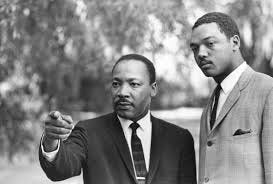
Reverend Jesse was black activist and confidante of Dr. Martin Luther King, one of a handful of possible ascendents to someday leadership. It would be good press and a feather in his cap if he could help quell the violence in Bermuda. He would speak at the Southampton Princess.
I knew not much about the young firebrand other than the fact that his stock was rising fast in the civil rights movement. This was partly due to an incendiary style of rhetoric, in contrast to his mentor; this spoke to the young, ignitable men who had had enough. It did not hurt that he was also damn good lookin’. Bermuda was nervous about him coming. Things were dicey; his presence could go either way. Security was high, expectations uncertain.
The hotel ballroom was filled to overflowing. Outside, crowds pressed against the barricades. Inside, I did my best to remain invisible, near a stairwell exit just in case.
If I did not know much about him, I learned quickly. I remember a young man who could simultaneously ignite a crowd to frenzy while at the same time restraining them in the palm of his hand. The Reverend could work a room, one minute pragmatically explaining that violence was not in their best interests no matter how much anger was in their hearts, and could ultimately only hurt the cause. At the finish he exhorted them to chant, “I am! (I am!) Somebody! (Somebody!) repeating and repeating the call and response that went on long after his heavy body-guard had moved him into the evening. People were jacked. I was jacked. He was the real deal. I saw firsthand the “why.” the captivating, charismatic magnetism of the man.
Reverend Jesse Jackson died this week of a progressive neurologic disorder. He was 84. He ran for president twice. He was with Dr. King the night he was assassinated. His place in history is assured.
I was lucky to have spent an hour in his presence. Godspeed Jesse Jackson.

I live in Pittsburgh where the last surviving newspaper, the Pittsburgh Post Gazette is about to stop the presses and close its doors. Forever. Founded on July 29, 1786, it is only ten years younger than our country. Pittsburgh was but a small frontier town in a country still in diapers. Think about that. I delivered the paper as a boy.
Recently, a lifelong friend of mine planted a seed in my head. “It won’t be long before someone starts up a new paper to take its place,” he reasoned. “And when they do, they’ll want a theatre / entertainment critic.”
My wife and I, having worked in theatre, dance, and music our entire lives, see everything we can of Pittsburgh’s many cultural offerings. Cabaret, jazz, and plays. Authors, lecturers, and of course, theatre and dance. And, our own beloved, world-class Pittsburgh Symphony Orchestra.
My friend said it might not be a bad idea to play at being a critic — review some of the things we see and hear just to have some pieces in my pocket should the opportunity arise to throw my hat in the ring. It’s no surprise I chose to write about the PSO for my first attempt.
And so, I’d like to share this with you, my first stab at critical journalism, with the hope that you will make your thoughts known in the comments. Those who know me in life, or through my weekly Substack, will know my voice and insights may be uh… a tad unorthodox. Deal with it. The working by-line for the column came from Shannon. Please enjoy…
TWO ON THE AISLE - Sharks Swim and Jets Fly at Heinz Hall
All musicians begin the same way. If they’re lucky a procession of good teachers lead them down the path, each having their day and their influence, leaving their mark of good and bad habits before passing them along to the next-teacher-up, to further their development. Some teachers linger long in importance, sometimes shaping a life. But in the end, if the student is lucky, he or she has managed to find their way to a kind of completeness, a well-rounded musicianship that allows them to specialize and succeed in the genre they have chosen. Or the genre that has chosen them.
Most instrumentalists, in the beginning, will have the same foundational elements knocked into their heads and bodies. Most begin with a “classical” approach. Learn the rules before breaking them. Scales, majors and minors, are a necessity. A given basic since so much theory and technique rely upon them. The ability to read music, to speak the language of music enables one to play in ensemble, large and small. It is universal. At first, the ability to begin and end in the same room together is an accomplishment; a sort of miracle. But as the musician grows and demands more of his or her self, and expects the same from their colleagues, the skin in the game thickens. Interpretation of those squiggles on the page deepens the risk / reward equation.
Which leads us to “straight eighths” and “swung eighths.” Pay attention now. Witness, Exhibit A.
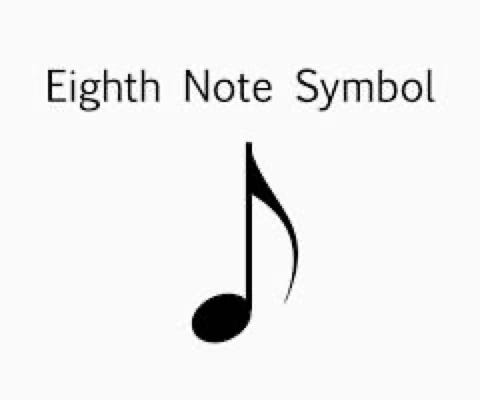
In classical music eighth notes are played straight. One-and Two-and Three-and Four-and, ta-ta ta-ta ta-ta ta-ta, as steady and unalterable as your inner and outer metronome will allow.
In jazz, you enter the dark side. The eighth note looks the same, a filled in note-head with a stem and a flag, but is played not as Mozart or Bach would have us play it. No. It is played as Duke, (Ellington) would have us play it. It is the eighth note of SATIN DOLL, not that of EINE KLEINE NACHTMUSIK. It is a lazier sort of eighth note, yet equally as disciplined as its cousin, more akin to the first and last note of an eighth-note triplet or a dotted-eighth sixteenth note pairing. It is a high-hat cymbal playing tsch tsch tsch-tsch tsch tsch-tsch tsch tsch-tsch, repeat as needed. It is sexy and slinky, heavily made up and dragging a fox stole across the dance floor.
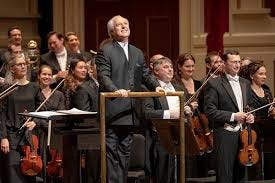
Saturday night, Two On the Aisle were treated to a most memorable evening, as any evening that begins and ends at Heinz Hall with Maestro Manfred Honeck at the podium, stick-in-hand, charges at the ready, awaiting downbeat, is. Not to gloss over things lightly, but with a need for a hint of brevity, the program.
It began with a Piazzola worthy TANGO, by Arturs Maskats featuring a masterful bandoneon player, (the Argentinian button-squeezebox that is fiendishly difficult to play, reason being that unlike other bellows instruments such as its cousin, the accordion, each button plays one note when the bellows inhales, but a different note on the exhale. To play it well requires the sacrifice of one’s soul to the man at the midnight crossroads.) I loved it.
This was followed by a Mozart violin concerto featuring Randall Goosby in a star turn making it look all too easy, (but don’t we know better?) The only thing cooler than Master Goosby was the white tunic he wore, and the blues encore he played, after giving the audience the choice of that, or something from Bach, (nothing personal J.S.)
After intermission, came one of the most gorgeous pieces God ever allowed humans to sip, Barber’s ADAGIO FOR STRINGS. It is hard for one person to begin at triple ppp, never mind the full complement of PSO’s strings, but Maestro Honeck manages the trick handily. From fifth row center, the sound begins and you know they are playing yet it enters from another dimension, sneaking in from the ether, first it wasn’t and then it was, inevitable, and you think it might be a good idea to check your hearing, such is the stealth it rides in on.
THEN, then the purpose of the evening is upon us. Bernstein’s masterpiece of masterpieces, this time in a medley of eternal melodies from arguably the greatest musical of all time ever to be, WEST SIDE STORY.
It is at this point that I must circle back to the beginning of this piece. There is an unspoken thinly-veiled snobbery amongst world-class classical musicians that looks down its Parnassian nose at all things not-classical. I suspect, given its provenance from the mighty Lenny B, it is not as bad as, say, your average pops-concert series, a necessity to keep almost all major orchestras of the world from not dipping too deeply into the red. Oh, if only it weren’t so.
There are precious few musicians capable not only of straddling the line, while whole-heartedly living in both worlds comfortably. Andre Previn comes to mind. Bernstein, of course, another, the vernacular of both oeuvre rolling off their tongues and hands like salt and pepper.
There is no one, and I mean NO ONE, as in love with this orchestra as I. Me. But I have to say, much as it saddens me to say it, popular music is not its meat. It is only through the sheer, indomitable, unconquerable nature of the dance music of West Side Story that allows it to transcend the fact that, no matter how the written music of the arrangement we heard was represented on the page, so passionately rendered by this magnificent orchestra, it was able to survive the battle of straight eighths vs swung eighths. As Duke wrote in one of his thousands of compositions, IT DON’T MEAN A THING IF IT AIN’T GOT THAT SWING.
Forgive me. It was gorgeous. It was righteous. It was perfect. It just… well… didn’t swing as it should / might / could; this despite the fact that the PSO’s principal bassist, Jeff Grubbs, is also Pittsburgh’s first call jazz bassist, and deservedly so. My advice? Next time, let Master Grubbs bring in one of the many super-fine drummers to play trap-set and let a jazz rhythm section drive this baby to a rumble in the night.
One more thing. Before we go… the quartet / sextet that gave us the après concert nightcap was superb. Especially lovely, was Tony and Maria’s West Side duet ONE HAND / ONE HEART.
Until soon, see you on the aisle.
TWO ON THE AISLE are lifelong musician, Alki Steriopoulos, and his über-talented wife, dancer / artist Shannon McGough. Visit Alki at www.iamalki.com
How fascinating that you witnessed Jackson at such a pivotal moment in history. Also, I fully concur with your advice about getting one of your city's suberb rhythm sections to drive future PSO jazz forays. Having played with both Jeff Grubbs and Byron Stripling, whom I believe directs the Pops program, I know they would be able to lead such a charge if budget permits.
Is your middle name Zelig? You are everywhere.